
How to Spot and Stop Common Houseplant Pests
Published on: February 17, 2026 | Last Updated: February 17, 2026
Written By: Lena Greenfield
You’ve noticed something isn’t right with your favorite plant-maybe some odd spots, sticky residue, or tiny moving dots. You’re worried a tiny infestation could turn into a full-blown takeover, and you’re right to be concerned.
In this guide, I’ll share the methods I’ve used for years to protect my own plant collection, covering how to identify common pests, effective treatment options, and simple prevention strategies.
Early Signs Your Plant Has Unwanted Guests
You don’t need a microscope to spot a pest problem early. Catching these invaders quickly is the single biggest factor in saving your plant with minimal fuss. I’ve learned to spot the subtle hints long before I see the actual bugs.
Watch for leaves that look dusty or dirty but won’t wipe clean. This is often the first sign of spider mites. A quick tip: mist a leaf and look for ultra-fine webbing—that’s a surefire mite signal. If you spot them, treat promptly to protect your indoor plants. Regular checks and preventive care help keep spider mites at bay indoors.
Sticky leaves or a shiny residue on the foliage or surface below your plant is a major red flag. This “honeydew” is waste from sap-sucking pests like aphids and scale. That sticky film can attract sooty mold, turning a pest issue into a fungal one.
Any sudden change in new growth is a cry for help. Pests love tender, fresh leaves. If new growth is deformed, stunted, or covered in small yellow speckles, inspect it immediately. I always check the undersides of new leaves first; that’s where trouble likes to hide.
Seeing tiny flies buzzing around your plant’s soil? Those are likely fungus gnats. While the adults are mostly annoying, their larvae in the soil can munch on delicate roots, stressing your plant.
A Visual Guide to Common Houseplant Pests
Spider Mites
These aren’t insects but tiny arachnids, related to spiders. You’ll see fine, silky webbing, especially where leaves meet stems. The leaves themselves get a stippled, dusty look. Spider mites thrive in hot, dry conditions, so I regularly mist my tropical plants to deter them.
My go-to treatment involves three simple steps:
- Isolate the plant immediately to prevent spreading.
- Take it to the shower or sink and spray the entire plant, especially leaf undersides, with a strong stream of water to dislodge the mites.
- Wipe remaining webbing and mites with a damp cloth and treat with insecticidal soap or neem oil.
Mealybugs
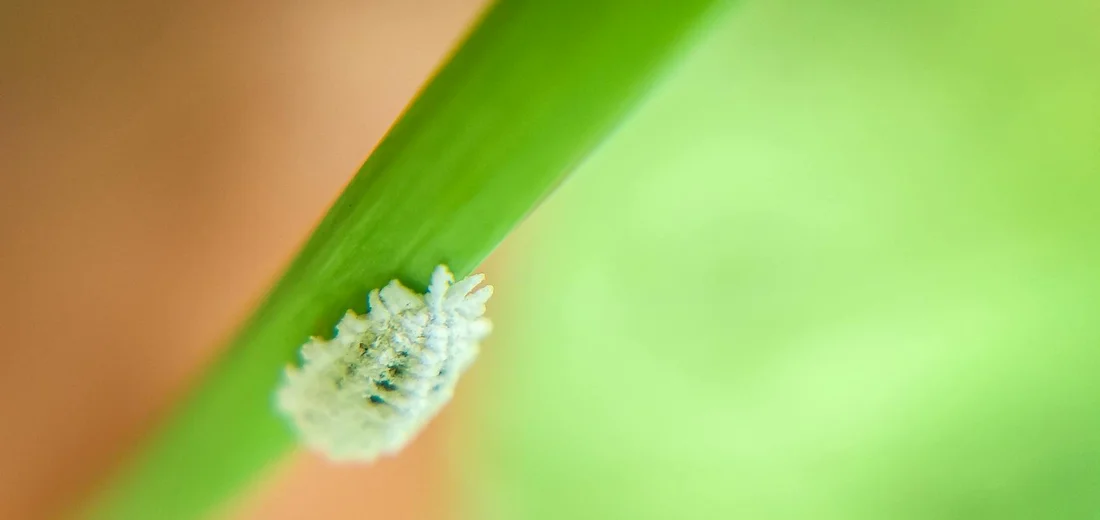
These look like tiny bits of cotton or fluffy white powder tucked into leaf joints and stem crevices. They suck plant sap, weakening it and excreting sticky honeydew. I keep a bottle of 70% isopropyl alcohol and cotton swabs on hand specifically for these fluffy fiends.
For a small infestation, dab each bug directly with an alcohol-soaked swab-they dissolve on contact. For larger issues, mix a few tablespoons of neem oil with a drop of dish soap in a spray bottle of water and coat the plant thoroughly.
Scale Insects
Scale can be tricky because they look like small, brown, bumpy growths stuck to stems and leaves. They don’t move, so it’s easy to mistake them for part of the plant. If you can flick a bump off with your fingernail and it leaves a sticky residue, you’ve found scale.
My method is mechanical removal first. I gently scrape them off with my thumbnail or an old toothbrush. Afterward, I wipe the area down with a soapy water solution to clean up any remaining honeydew and eggs.
Fungus Gnats
These are the tiny, dark, mosquito-like flies that love to hover over damp potting mix. The real problem is their larvae, which live in the top few inches of soil and feed on organic matter and roots. They’re a sign you might be overwatering.
The best control is to break their life cycle. I let the soil dry out more between waterings. For immediate action, I use yellow sticky traps to catch the adults and mix a bit of Bacillus thuringiensis israelensis (Bti) into my watering can to kill the larvae.
Aphids
These are small, soft-bodied, pear-shaped insects that cluster on new growth and flower buds. They come in green, black, or white. Aphids multiply incredibly fast, so a small group can become a major colony in just days.
A strong blast of water from a hose or spray bottle knocks most of them off. For stubborn clusters, I spray the plant with a mix of water and a few drops of mild liquid dish soap, making sure to coat the undersides of the leaves where they love to congregate.
Thrips and Whiteflies
Thrips are tiny, slender insects that scrape at leaves, leaving behind silvery streaks and black specks (their waste). Whiteflies are tiny, white, moth-like flies that swarm when you disturb the plant. Both are prolific and can quickly hop from plant to plant, so isolation is key. For succulents, start with careful inspection and quarantine to prevent spread. If treatment is needed, use insecticidal soap or horticultural oil labeled for succulents.
For both pests, I rely on yellow sticky traps to monitor and reduce adult populations. I follow up with a thorough spray-down using insecticidal soap or neem oil every 5-7 days for a few weeks to tackle the eggs and nymphs that hatch later.
Your Action Plan for Pest Treatment
Step 1: Immediate Isolation and Manual Removal
When I spot pests on one of my plants, my first move is always to isolate it right away. Moving the infested plant to a separate room or area prevents pests from spreading to your healthy plants, which I’ve seen save entire collections from disaster. I use my hands or a cotton swab dipped in rubbing alcohol to gently wipe off visible bugs like aphids or mealybugs. For succulents with tight crevices, a soft toothbrush works wonders to dislodge pests without harming the leaves. Sometimes it’s worth considering whether the issue is a pest or a disease, since many common succulent problems are treatable when diagnosed early. That distinction helps you choose the right approach, whether it’s cleaning, isolation, or a targeted treatment.
- Move the plant to a well-lit, isolated spot away from others.
- Inspect all leaves, stems, and soil for pests, using a magnifying glass if needed.
- Gently remove pests with tools like tweezers, cotton swabs, or a stream of water.
Quick tip: Check the underside of leaves-that’s where many pests like to hide, and I always find surprises there during my inspections.
Step 2: Apply Gentle, Effective Treatments
After manual removal, I turn to gentle treatments that are safe for my home and plants. Neem oil spray is my go-to because it disrupts pests’ life cycles without harsh chemicals, and I’ve used it for years on everything from fiddle leaf figs to echeverias. Mix a few drops of neem oil with water and a bit of mild soap, then spray it evenly on the plant, making sure to cover both sides of the leaves. Insecticidal soap is another favorite – it’s eco-friendly and works fast on soft-bodied pests like spider mites. For succulents, I also use a light neem oil solution with a touch of Epsom salt, kept well-diluted and applied during milder weather. I always test on a small area first and avoid spraying in direct sun to minimize leaf burn.
- Prepare a neem oil solution: 1 teaspoon neem oil, 1 quart water, and a drop of dish soap.
- Spray thoroughly every 5-7 days until pests are gone, avoiding direct sun to prevent leaf burn.
- For stubborn cases, try a hydrogen peroxide mix (1 part 3% peroxide to 4 parts water) for soil drenching to target larvae.
I love how these natural options keep my indoor garden thriving without worrying about toxins around my pets or kids.
Step 3: When to Use Stronger Solutions
If gentle treatments don’t cut it after a couple of weeks, it might be time for stronger measures. I only use chemical pesticides as a last resort, like when I had a severe scale infestation on my jade plant that neem oil couldn’t handle. Look for signs like rapid pest spread, plant decline, or no improvement with organic methods. Opt for targeted products labeled for houseplants, and always test on a small area first to avoid damage.
- Systemic insecticides can be effective for root-level pests but use them sparingly and follow instructions closely.
- Consider biological controls like beneficial insects (e.g., ladybugs for aphids) if you have a dedicated plant room.
- Monitor the plant closely post-treatment to ensure recovery and avoid overuse.
Remember, stronger solutions should be a backup plan-prioritize your plant’s health and your home’s eco-balance.
Preventing Pests from Coming Back
Quarantine Every New Plant
I never skip quarantining new plants, and it’s saved me from countless headaches. Keeping new additions separate for 2-3 weeks lets you catch any hidden pests before they invade your main collection, a lesson I learned after a mite outbreak from a nursery-bought succulent. This period doubles as quarantine and a chance to treat any issues before they spread. It’s how you prevent pest spread to the rest of your plants. Place them in a different room, inspect daily, and treat any issues early. This simple habit builds a strong defense against future infestations.
- Isolate new plants in a well-ventilated area with indirect light.
- Check for pests, yellowing leaves, or unusual spots during the quarantine period.
- Only introduce them to other plants after a clean bill of health.
Quick tip: Wash the pot and refresh the soil of new plants to remove any hitchhiking eggs or larvae.
Create an Unfriendly Environment for Pests
Pests thrive in certain conditions, so I make my home less inviting by focusing on plant care basics. Environmental factors like excess moisture, poor ventilation, and crowded plantings can invite pests indoors. Proper watering and good air circulation are key—overwatering attracts fungus gnats, so I let soil dry out between waterings, especially for succulents. I also use well-draining pots and avoid crowding plants, which reduces humidity and pest hiding spots. Adding a small fan nearby improves airflow and deters mites.
- Water plants only when the top inch of soil is dry to prevent mold and pests.
- Use pots with drainage holes and sterile potting mix to minimize risks.
- Keep plants in bright, indirect light to strengthen their natural defenses.
By mimicking their ideal growing conditions, your plants become more resilient and less appealing to pests. This approach is a foundational step toward creating a comprehensive pest prevention strategy for your plant collection. Regular monitoring and proactive care help ensure all plants stay healthy and pest-free.
Make Plant Inspection a Routine
Regular checks are my secret to catching pests early, and I’ve turned it into a relaxing weekly ritual. Spending a few minutes each Sunday examining leaves, stems, and soil helps me spot issues before they escalate, and I’ve nipped many infestations in the bud this way. This habit also helps me spot early warning signs of pest infestations on my plants. Catching these signals early lets me act quickly to protect growth. Look for subtle signs like sticky residue, webbing, or tiny holes, and clean leaves with a damp cloth to keep them dust-free and healthy.
- Set a weekly reminder to inspect all plants, focusing on hidden areas.
- Use a journal to track plant health and note any changes over time.
- Involve family members-it’s a fun way to connect and care for your green space together.
Consistency here pays off big time, keeping your indoor jungle vibrant and pest-free with minimal effort.
Common Questions
How can I tell if the white specks on my plant are pests or just mineral deposits?
Mineral deposits from water wipe off easily, while pests like mealybugs will be clustered in crevices and feel slightly fuzzy or sticky.
What is the best way to check for pests on a spiny cactus or a fuzzy succulent?
Use a magnifying glass and a soft, dry paintbrush to gently part spines or fuzz for a clear view without damaging the plant.
Are there any pests that are particularly attracted to succulents?
Mealybugs are especially drawn to the tight, protected crevices between the leaves of succulents like echeverias and cacti. For indoor care, knowing the best ways to eliminate mealybugs from succulent houseplants is essential. Here are practical, house-friendly steps to tackle them.
Can houseplant pests spread to my other indoor plants?
Yes, most common pests like spider mites, thrips, and aphids can quickly crawl or fly to nearby plants, which is why immediate isolation is crucial.
What are the tiny black flies I see around my plants, and are they harmful?
Those are likely fungus gnats, which are mostly a nuisance, but their larvae in the soil can harm young roots if the infestation is large.
Why do my plants keep getting pests even after I treat them?
Pests can return if their eggs in the soil or hidden on the plant hatch, or if environmental conditions like overwatering and poor air circulation are not corrected.
Your Pest-Free Plant Journey
Based on my years tending to houseplants and succulents, I’ve learned that consistent inspection and gentle, timely treatments are your best defense against pests. Catching issues early saves you from bigger headaches down the road. Learning to spot common succulent pests—mealybugs, scale, and spider mites—helps you act quickly with targeted treatments. Plus, simple prevention like quarantining new plants and ensuring good airflow keeps problems from taking hold.
- Look over leaves and stems each time you water.
- Use simple remedies like neem oil or a soap spray.
- Separate any troubled plants right away.
For ongoing support, follow along with Hardy House Plants where I share more hands-on tips. Remember, most pest scares are fixable-your green thumb is stronger than you think!
Further Reading & Sources
- What pest control methods are recommended for …
- Houseplant Pest Control – Brooklyn Botanic Garden
- Managing insects on indoor plants | UMN Extension
- Managing Houseplant Pests | Colorado State University Extension Website
Lena Greenfield is a passionate horticulturist and plant care expert with over 10 years of experience cultivating and nurturing hardy house plants. With a deep understanding of both indoor and outdoor gardening, Lena shares practical advice on choosing, caring for, and maintaining resilient plants that flourish year-round. Through her knowledge and hands-on approach, Lena helps plant lovers transform their spaces into vibrant, green sanctuaries, no matter their gardening experience.
Common Pests