
Do Succulents Really Attract More Pests? Here’s the Truth
If you’re worried your succulent collection is a bug magnet, I want to ease your mind right away: succulents don’t inherently attract more pests than other houseplants. The real issue is that our common care mistakes create the perfect environment for pests to move in.
In my years of growing everything from jade plants to echeverias, I’ve learned it’s not about the plant, but about the conditions we provide. I’ll walk you through why this myth persists, the specific pests to watch for, and my proven prevention strategies.
We’ll cover: debunking the pest magnet myth, the real reasons pests appear, the most common succulent pests, and my simple prevention routine.
Do Succulents Really Attract More Pests?
In my years of collecting, I’ve found that succulents don’t inherently attract more pests than other common houseplants like pothos or spider plants. Pests are often more of an environmental issue than a plant-specific one. Environmental factors like humidity, irrigation, and airflow often drive pest problems indoors. While a pothos might attract gnats if overwatered, a succulent in the same condition might struggle with mealybugs.
I’ve noticed pests tend to target stressed plants, regardless of type. A thirsty spider plant and an overwatered echeveria are both beacons for trouble. Your care routine is the real pest magnet, not the plant genus.
What Actually Draws Pests In
- Plant Physiology: Succulents have thick, sap-filled leaves that can be a target for piercing-sucking insects, but their tough, waxy skin can also be a deterrent.
- Watering Habits: Overwatering is the single biggest attractor of pests like fungus gnats. A consistently damp environment is a bug’s paradise.
- Air Circulation: Stagnant air around any plant collection encourages spider mites and other pests to settle in.
- Plant Health: A weakened or stressed plant sends out chemical signals that pests can detect, making it an easy target.
From my personal experience maintaining mixed plant collections, pests do not consistently target my succulents over my philodendrons or monsteras. I often find the first signs of a pest issue on my more delicate, fast-growing plants, which seem to be the initial “canary in the coal mine.” My succulents are usually the last to show problems and are often the easiest to treat when an issue arises.
Identifying Common Pests on Succulents
Early identification is your best defense. Catching a pest problem early makes treatment simple and prevents it from spreading to your entire collection.
The Usual Suspects
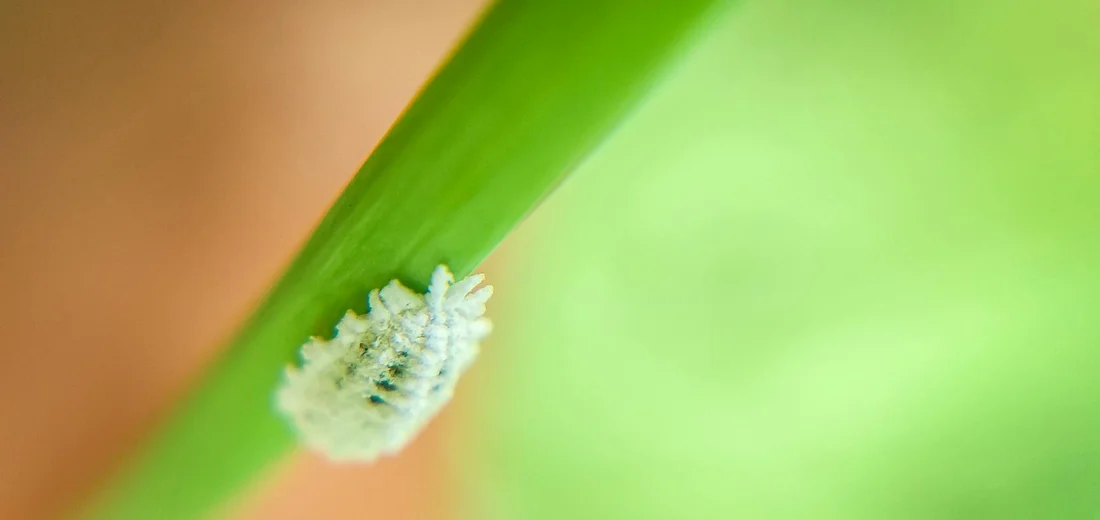
- Mealybugs: Look for small, white, cottony masses tucked in leaf crevices and where leaves meet the stem. They suck sap, causing yellowing and stunted growth.
- Scale Insects: These appear as small, brown, bumpy shells stuck firmly to leaves and stems. They’re immobile and also drain plant vitality.
- Spider Mites: You’ll see fine, silky webbing, especially under leaves and between spines. Leaves may develop a stippled, dusty look.
- Aphids: Tiny green or black pear-shaped bugs that cluster on new, tender growth and flower buds. They leave behind a sticky residue called honeydew.
- Fungus Gnats: Small, black flies buzzing around the soil surface. Their larvae live in the soil and can damage young roots in severe infestations.
My quick tip: Keep a cheap jeweler’s loupe or magnifying glass in your plant care kit. A quick, close-up scan of your succulents every week or two helps you spot pests long before they become a major problem. Use this habit as part of a seasonal pest control guide for succulents—spring and winter each bring different pests and care needs. Tailor your inspections to the seasons, starting with spring growth and winter dormancy.
Why Succulents Can Be Vulnerable to Pests
-
Watering stress really takes a toll on succulents. I’ve seen my own plants struggle when I’ve accidentally overwatered or let them go too dry. Stressed succulents can’t produce their natural defenses, making them an easy target for pests like mealybugs and aphids.
-
High humidity and soggy soil are like a welcome mat for unwanted guests. In my experience, using a dense potting mix led to fungus gnats swarming around my echeverias. Opt for a fast-draining soil and keep humidity low to create an environment pests hate.
-
Physical nicks or bringing home a sick plant can spell trouble. I once introduced scale insects by not checking a new purchase closely enough. Always handle succulents with care and quarantine new arrivals to avoid spreading infestations.
Proactive Pest Prevention for Succulents
-
Give new plants a thorough once-over before they join your collection. Look under leaves and along stems for tiny bugs or webbing. I make it a habit to inspect every new succulent under bright light to catch pests early, as this gives me a better view to check for any issues before they start in their new home.
-
Stick to a watering routine that lets soil dry out completely between drinks. I water my succulents only when the top inch of soil feels bone-dry. Consistent watering prevents stress that attracts pests.
-
Place plants where air can circulate freely and use a gritty soil mix. I add perlite to my potting soil for better drainage. Good airflow and dry roots keep pests from settling in.
-
Move any plant showing pest signs away from others right away. I keep a separate shelf for isolation. Quick action stops pests from hopping to healthy plants.
-
Gently wipe leaves with a soft, damp cloth to remove dust and eggs. I do this monthly to keep surfaces clean. Regular cleaning disrupts pest hiding spots and discourages infestations, no matter what method you use.
Integrated Pest Management for Infested Succulents
When you find pests on your succulents, a calm and systematic approach works best. I’ve rescued dozens of plants using this exact five-step method, and it truly prevents a small issue from becoming a full-blown infestation. Identifying common succulent pests—mealybugs, scale, spider mites, and aphids—early makes treatment easier. Regular inspections and preventive care help keep infestations from taking hold.
- Isolate the plant immediately to protect others. Move the affected plant to a separate room or a different windowsill. This simple step is your first and most critical line of defense.
- Remove pests manually with alcohol swabs or water spray. For mealybugs and scale, I dip a cotton swab in 70% isopropyl alcohol and dab each pest directly. For spider mites, a strong spray of water can knock them off the leaves.
- Apply insecticidal soap or neem oil treatments as needed. These are my go-to solutions. Insecticidal soap suffocates soft-bodied insects on contact, while neem oil disrupts their life cycle. Always test on a small leaf first and apply in the evening to prevent sunburn.
- Prune severely damaged areas to encourage recovery. If a leaf is more pest than plant, it’s okay to snip it off. Use clean, sharp scissors. This helps the plant focus its energy on growing new, healthy tissue.
- Monitor the plant closely and repeat treatments if necessary. Pests can be stubborn. Check your plant every few days for two weeks. You’ll often need a second or third application to catch any newly hatched bugs.
Quick tip: Keep a small spray bottle of pre-mixed insecticidal soap ready to go for fast action when you spot the first bug.
Boosting Succulent Natural Defenses
A stressed succulent is a magnet for trouble. The best pest control is a healthy, resilient plant that can fight off invaders on its own. Think of consistent care as your succulent’s daily vitamin—it builds a strong foundation that pests find much less appealing. To avoid killing your succulents, follow these essential care tips. Consistent, proper care keeps them resilient and pest-resistant.
- Emphasize consistent care routines to reduce plant stress. Inconsistent watering is the number one cause of stress I see. Succulents prefer a thorough soak followed by a period of complete drought. This cycle keeps roots strong and leaves plump.
- Suggest using biological controls like beneficial insects for severe cases. For a recurring outdoor infestation, I’ve introduced ladybugs to my garden with great success. They are voracious predators of aphids and other small pests.
- Highlight how optimal light and temperature support pest resistance. A succulent basking in plenty of bright, indirect light develops thicker, tougher skin. This physical barrier is much harder for pests like spider mites to penetrate.
- Share experience on resilient succulent varieties that handle pests better. From my collection, I’ve found that Haworthias and Gasterias are remarkably pest-resistant. Snake Plants and Jade Plants are also tough cookies that seem to shrug off most common invaders.
Remember, a little bit of proactive care saves you from a lot of reactive pest control later on.
FAQs
How does overwatering specifically attract pests to succulents?
Overwatering creates damp soil that attracts pests like fungus gnats and encourages conditions for root rot.
Are there any natural predators I can introduce to control pests on succulents?
Yes, beneficial insects like ladybugs can be introduced to prey on aphids and other small pests naturally.
What is the most common mistake that leads to pest infestations in succulents?
Inconsistent watering is the most common mistake, as it stresses the plant and makes it more vulnerable to pests.
Can succulents develop resistance to pests over time?
With proper care and optimal conditions, succulents can build stronger natural defenses that deter pests effectively. Do succulents need to thrive? Yes—thriving plants are better able to resist pests when given bright light, well-draining soil, and careful watering.
How do I know if my succulent’s pest problem is severe?
A severe infestation is evident when pests are widespread, causing extensive leaf damage and stunted growth.
What are the best ways to dispose of a severely infested succulent to protect others?
Isolate and discard the plant in a sealed bag to prevent pests from spreading to other healthy plants.
Your Succulent Pest Defense Plan
In my experience, succulents don’t inherently attract more pests—they just need the right care to stay healthy and resilient. Common threats are pests like mealybugs, scale, and spider mites, and diseases like root rot. These problems are usually treatable when caught early with proper care.
- Water only when the soil is completely dry to avoid root rot and fungus gnats.
- Place them in bright, indirect light to strengthen their natural defenses.
- Inspect leaves regularly for early signs of trouble, like sticky residue or webbing.
You’ve got this! With a little attention and these simple steps, you can grow lush, pest-free succulents that bring joy to your space for years to come. In this outdoor succulent care guide, you’ll learn how to grow succulents in your garden. These tips cover sun, soil, and steady watering to keep them thriving outside.
Further Reading & Sources
- Insect pests of cacti and succulents grown as house plants
- Common Pests on Succulents and Easy Treatments for Them – Succulent Plant Care
- Succulent Security: Managing the Top 10 Pests and Diseases for Healthy Plants
- Common Pests Of Succulents – Fighting Cactus And Succulent Pests | Gardening Know How
Lena Greenfield is a passionate horticulturist and plant care expert with over 10 years of experience cultivating and nurturing hardy house plants. With a deep understanding of both indoor and outdoor gardening, Lena shares practical advice on choosing, caring for, and maintaining resilient plants that flourish year-round. Through her knowledge and hands-on approach, Lena helps plant lovers transform their spaces into vibrant, green sanctuaries, no matter their gardening experience.
Common Pests