
Organic vs. Inorganic Soil for Succulents: A Simple Guide
Choosing the right soil for your succulents can feel confusing, especially when you’re worried about giving them the perfect home. The secret to a thriving plant isn’t a mystery-it’s all about balancing the organic and inorganic stuff in the pot.
I’ll walk you through everything, from what these components actually do to creating your own perfect blend. We’ll cover what organic and inorganic components are, their roles in succulent health, the ideal soil mix ratios, and my favorite DIY recipes.
Why Your Succulent’s Life Depends on the Right Soil Mix
Think of soil like your succulent’s home-it needs the right foundation to thrive. Getting the soil mix wrong is the single biggest reason I’ve seen succulents fail in people’s homes. In their natural habitats, these plants cling to life in rocky, sandy, and often arid places where water drains away in seconds. A dense, moisture-retentive soil suffocates their roots and invites rot, a death sentence for these drought-loving beauties.
I learned this the hard way with my first jade plant, which I potted in generic potting soil. That poor plant sat in wet soil for days, and its roots simply turned to mush. A proper mix that mimics their native environment provides the sharp drainage and air pockets their roots desperately need to breathe and stay healthy.
What Are Organic Soil Components?
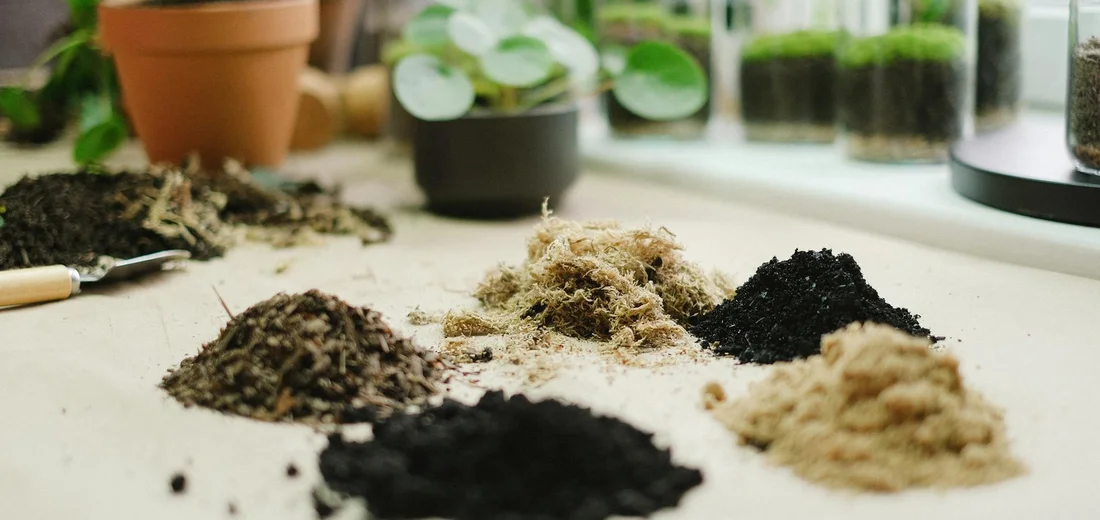
Organic components are the parts of your soil mix that come from something that was once living. These ingredients, like compost or peat moss, are fantastic because they decompose over time, releasing nutrients that feed your plants. They act like a tiny, slow-release fertilizer buffet for your succulents.
However, there’s a catch. Because they break down, organic materials also hold onto water, which can be dangerous for succulents if you use too much. It’s a delicate balancing act-you want just enough organic matter to provide food and a little moisture, but not so much that the soil stays soggy. Succulents have specific water requirements, so it’s important to understand what succulents need to thrive. This ensures you give them the right conditions without overwatering.
My Go-To Organic Ingredients for Succulent Potting Mix
Over the years, I’ve tested countless combinations in my own collection. These are the organic components I consistently reach for because they offer the best balance of moisture retention and aeration.
- Coco Coir: My personal favorite. It’s a sustainable byproduct of coconut husks that holds moisture but still feels fluffy and airy. I find it’s less prone to compacting than peat moss.
- Compost: I always add a small handful of well-aged, sifted compost to my mixes. This is my secret weapon for giving young succulents a gentle, natural nutrient boost without harsh chemicals.
- Pine Bark Fines: These small chunks of pine bark are fantastic. They create vital air pockets as they slowly break down, improving drainage over the long term.
- Worm Castings: Think of this as a super-powered, mild compost. It’s rich in nutrients but won’t burn delicate roots, making it perfect for a light feeding within the soil itself.
Quick Tip: A good starting ratio is one part organic material to two parts inorganic material for most succulents. If you live in a very humid climate, you might even go with a 1:3 ratio to be extra safe against rot.
What Are Inorganic Soil Components?
Think of inorganic soil components as the non-living, mineral-based skeleton of your potting mix. These materials don’t break down to provide nutrients, but they create the airy, fast-draining structure that succulent roots absolutely crave. I learned this the hard way after losing a beautiful echeveria to rot in a soil that was too dense and organic. Are signs of poor soil quality a particular risk for succulents? If your mix drains slowly or stays damp, those are red flags to watch for.
Inorganic components are things like crushed rocks, sands, and fired clays. They don’t absorb much water themselves, which forces the soil to dry out quickly between waterings. This mimics the gritty, lean conditions of a succulent’s natural habitat, preventing the dreaded root rot.
The Best Inorganic Materials I Use for Drainage and Aeration
Over the years, I’ve tested nearly every gritty amendment available. Here are my absolute favorites that I always keep on hand in my potting shed.
- Perlite: Those little white, popcorn-like bits are a staple in my mixes. It’s incredibly lightweight and excellent for aeration. I find it perfect for smaller succulents and seedlings.
- Pumice: This is my personal top choice. It’s porous like perlite but has more weight, so it doesn’t float to the top when you water. Pumice provides fantastic drainage while holding tiny amounts of moisture on its surface for roots to find.
- Coarse Sand (Horticultural Grit): Not beach sand! You want sharp, coarse sand that feels gritty. I use it to add weight and improve drainage, especially for top-heavy plants like jade.
- Crushed Granite or Chicken Grit: This is the ultimate for creating a “gravel road” in your pot. It’s completely inert, doesn’t break down, and ensures water flows through in seconds.
- Turface or Baked Clay: These fired clay products are hard, porous granules that wick away moisture effectively. I often use them as a substitute for pumice with great success.
Quick Tip: A simple 1:1 mix of potting soil and perlite is a fantastic and cheap starting point for most common succulents! Using perlite in succulent soil mixes improves drainage and aeration. This helps prevent root rot and keeps roots healthy in dry conditions.
Building Your Perfect Succulent Soil Mix: A Simple Ratio Guide
Creating your own mix feels like a science experiment, but it’s surprisingly simple. This three-step process has never failed me and lets you customize the blend for your specific plants and home environment.
Step 1: Choose Your Base Potting Mix
I always begin with a high-quality, regular potting soil. Look for a mix that doesn’t have added wetting agents or slow-release fertilizer beads, as these can stay too moist for succulents. This organic base will hold just enough moisture and provide a tiny bit of nutrition. Do succulents really need special soil? The truth is they thrive in well-draining mixes, and a regular potting soil can work if you add coarse sand or perlite to improve drainage.
You can also use a pre-made cactus and succulent mix, but I often find even these benefit from extra grit. I treat them as a base, not a ready-to-use product.
Step 2: Add Your Inorganic “Grit” for Drainage
This is where the magic happens. Grab one or a combination of the inorganic materials from the list above. My go-to ratio is a simple 1:1 mix-one part potting soil to one part inorganic grit. For plants that are super sensitive to moisture, like lithops, I’ll push that to a 1:2 ratio (one part soil, two parts grit).
- Put on a dust mask (especially with perlite).
- Combine your ingredients in a large tub or bucket.
- Mix everything thoroughly with your hands or a trowel until it’s uniform.
You’ll know it’s right when the mix feels gritty and loose, not clumpy or muddy.
Step 3: Test Your Mix Before Planting
Never skip this final check! It takes two minutes and saves you from potential heartache later.
Take a handful of your finished mix and squeeze it in your palm. The mix should loosely clump together when you squeeze it, but it should also fall apart easily when you poke it. If it forms a tight, muddy ball, add more grit. If it won’t hold any shape at all and is too dusty, add a touch more potting soil.
Finally, do a water test. Pour a cup of water into a pot filled with your dry mix. The water should rush through the drainage hole almost immediately, not pool on the surface. This confirms you’ve built a fast-draining environment where your succulents can thrive. To keep this in check, periodically test the soil’s drainage. If it ever slows, adjust the mix to restore fast drainage.
Troubleshooting Common Soil Problems for Potted Succulents
Even with a perfect soil mix, things can sometimes go wrong. I’ve learned to spot these issues early, which has saved many of my succulents from a soggy demise. Understanding common succulent soil problems and how to fix them is essential for keeping plants healthy. From drainage issues to soil compaction and mineral buildup, these fixes are usually straightforward. Let’s walk through the most common problems you might face.
Yellowing, Mushy Leaves
This is the classic sign of overwatering. When the soil holds too much moisture for too long, the roots literally suffocate and rot. If you see a yellow, translucent leaf that feels soft, your first step is to stop watering immediately. Gently remove the plant from its pot to check the roots. Healthy roots are firm and white or light tan. If they’re brown, black, and slimy, you’ve got root rot.
- Immediate Action: Unpot the plant and remove all the wet soil.
- With clean, sharp scissors, cut away every single rotten root and any mushy leaves.
- Let the plant sit out in the air, bare-root, for a day or two to callus over the cuts.
- Repot into a completely fresh, dry, fast-draining mix and do not water for at least a week.
Soil Pulling Away from the Pot’s Edge
If you see a gap forming between your soil and the pot, that’s a sign of a hydrophobic mix. This happens when the organic matter, like peat moss, becomes too dry and actually repels water. The water you pour in just runs down the sides and out the drainage hole, never reaching the roots. In my collection, this was a recurring issue with store-bought mixes that were heavy on peat.
- Quick Fix: Try the “bottom watering” method. Place the entire pot in a shallow dish of water for about 30 minutes. This allows the soil to slowly soak up moisture from the bottom.
- Long-Term Solution: When you repot, use soil components that are less prone to this, like coconut coir, or simply ensure your mix has a good amount of inorganic material to maintain structure.
White Crust on the Soil Surface
That white, crusty layer is a buildup of soluble salts from your tap water and any fertilizer you’ve used. While not an immediate emergency, it can alter the soil’s pH and make it harder for your plant to absorb nutrients over time. I see this most often in my terracotta pots, where evaporation is high.
- You can gently scrape off the top layer of crusty soil and replace it with fresh mix.
- Every few months, give your succulents a thorough “flush.” Take them to the sink and run a slow, steady stream of water through the soil for a minute or two, letting it drain completely. This helps wash out excess salts.
- Using filtered or distilled water for watering can prevent this issue from the start.
Do You Need to Add Fertilizer to a Succulent’s Soil Mix?
This is a question I get all the time, and my answer is always the same: less is more. Succulents are adapted to survive in nutrient-poor soils, so they simply don’t need the heavy feeding that a flowering annual or a vegetable plant would. Over-fertilizing is a much bigger risk than under-fertilizing and can lead to weak, leggy growth and even burn the roots.
I treat fertilizer like a light vitamin supplement, not a main course. My personal rule is to only fertilize during the active growing season, which for most succulents is spring and summer. I completely stop all feeding in the fall and winter when their growth naturally slows down. These seasonal timing milestones are a key part of succulent care. They help you pace watering, light, and pruning with the seasons.
Choosing the Right Fertilizer
You don’t need a special, expensive “succulent” fertilizer. A balanced, water-soluble houseplant fertilizer works perfectly. Look for a formula with a balanced NPK ratio, like 10-10-10 or even one lower in nitrogen. The key is to dilute it to half or even a quarter of the strength recommended on the bottle. I always err on the side of weakness. For maximum growth, time fertilization with the plant’s active growing season—spring through summer. In peak growth, feed diluted every 4-6 weeks, and skip feeds in winter when growth slows.
- Water-Soluble Fertilizer: Easy to control and apply. Mix it weakly and use it in place of a regular watering.
- Slow-Release Granules: These can be mixed into the soil at the time of repotting and will feed the plant gently over several months. This is a great “set it and forget it” option for the busy plant parent.
My Simple Fertilizing Routine
After years of trial and error, this is the simple schedule I follow for almost all my succulents.
- Mark my calendar to fertilize once a month from April through September.
- I use a standard water-soluble 10-10-10 fertilizer.
- I fill my watering can and add fertilizer, but I only use half the amount the label says.
- I then use this weakly fertilized water to give my plants their monthly drink, ensuring the soil is dry beforehand.
This light feeding during the growing season gives them just enough of a boost to produce vibrant colors and strong, compact growth without the risk of fertilizer burn. If you’re using a fresh, high-quality potting mix at repotting time, it often contains enough nutrients to sustain the plant for its first year without any added fertilizer at all.
Common Questions
What is the difference between organic and inorganic soil?
Organic components come from once-living matter and provide nutrients, while inorganic components are mineral-based and provide structure and drainage.
Are organic or inorganic soil amendments better for succulents?
A balanced mix is best, as inorganic amendments provide essential drainage while organic matter offers slow-release nutrients.
What is the difference in nutrient additions between organic and inorganic soil?
Organic matter naturally releases nutrients as it decomposes, whereas inorganic components are inert and require separate nutrient additions through fertilizer.
Can organic and inorganic soil components contain pollutants?
Yes, organic matter can contain pesticide residues, while inorganic components like certain gravels can introduce heavy metals.
What are examples of organic and inorganic soil components?
Common organic examples include coco coir and compost, while inorganic examples include perlite, pumice, and coarse sand.
How do organic and inorganic components affect the soil long-term?
Organic matter decomposes and depletes over time, changing soil composition, while inorganic materials remain stable and maintain soil structure.
Your Succulent Soil Simplified
Based on my years of growing succulents, I always recommend a soil mix that prioritizes excellent drainage by using more inorganic materials while adding just a touch of organic matter for gentle nutrition. Are best soil mixes the same for all succulent types, or do different species benefit from tweaks based on their native habitats? In practice, while the core principle remains drainage, you may adjust by plant type—grittier mixes for desert cacti and slightly more organic matter for tropical succulents. Soil mixes differ by type, and understanding these differences can help you provide the best environment for your plants.
- Blend about 70% inorganic components like perlite or coarse sand with 30% organic matter like compost.
- Ensure the soil dries out completely between waterings to prevent root rot.
- Repot every 1-2 years to refresh the mix and check for compacted soil.
Trust your instincts and give your succulents the gritty foundation they crave. You’re now equipped to make smart soil choices, so go ahead, mix up a batch, and enjoy watching your plants thrive with health and happiness. Remember, knowing when to repot and change the soil is just as important as the soil itself.
Further Reading & Sources
- Succulent Soil: The Ultimate Guide – Mountain Crest Gardens
- The Perfect Soil Mix & Fertilizers for Thriving Succulents – Succulents Box
- r/succulents on Reddit: What’s your favourite inorganic matter for the soil?
- Succulent Care Series: The Dirt on Soil – Artisan Plants
Lena Greenfield is a passionate horticulturist and plant care expert with over 10 years of experience cultivating and nurturing hardy house plants. With a deep understanding of both indoor and outdoor gardening, Lena shares practical advice on choosing, caring for, and maintaining resilient plants that flourish year-round. Through her knowledge and hands-on approach, Lena helps plant lovers transform their spaces into vibrant, green sanctuaries, no matter their gardening experience.
Soil Types