
Prune Your Plants for Better Air Flow and Light: A Simple Guide
Published on: March 30, 2026 | Last Updated: March 30, 2026
Written By: Lena Greenfield
Are your indoor plants looking a bit crowded and not thriving as they should? You might worry that pruning could harm them, but with the right approach, it actually boosts their health and vitality.
Drawing from my years of plant care, I’ll walk you through why pruning matters, when to do it, step-by-step methods, and tools to use.
Why Your Plants Crave an Open Canopy
Think of your plant’s canopy like a crowded room. When it’s too dense, nobody can breathe properly, and the people in the back can’t see a thing. Opening up that canopy is like opening a window and turning on a light, giving every single leaf the space and energy it deserves. I’ve seen countless plants transform from stagnant to spectacular after a simple thinning.
Good air circulation is a silent guardian against fungal diseases like powdery mildew. Stagnant, moist air is a breeding ground for trouble. By pruning for airflow, you create an environment where mold and mildew struggle to take hold, saving you from future headaches. I learned this the hard way with a dense rosemary plant that developed a nasty case of mold before I understood the power of pruning.
Light is food for your plants. When the top leaves create a thick umbrella, the lower leaves and inner stems are left in the dark, literally. They can’t photosynthesize effectively. Strategic pruning allows dappled light to reach the entire plant, encouraging fuller, more balanced growth from the bottom up. My once-leggy fiddle leaf fig filled out beautifully once I let the light reach its lower branches.
Spotting the Signs: When Your Plant Needs a Trim
Visual Clues of Poor Airflow
Your plant will tell you when it’s feeling stuffy. You just need to know what to look for. Keep a close eye on the density at the plant’s center; it should feel open, not like an impenetrable thicket. Here are the red flags I’ve learned to watch for over the years:
- Visible Mold or Mildew: A white, powdery substance on leaves or soil is a clear cry for help and better air movement.
- Consistently Damp Soil: If the soil takes forever to dry out, even with proper watering, the canopy is likely too thick, trapping all the moisture underneath.
- Yellowing Inner Leaves: These are the leaves being starved of light and air. They’ll turn yellow and drop off as the plant abandons them.
- A General Feeling of “Stuffiness”: When you look at the plant, it just seems congested and unhappy, with leaves pressed tightly against one another.
Assessing Light Blockage
This is a fun, hands-on test. Perform the “hand test” on a sunny day: place your hand between the light source and the lower parts of the plant. If your hand casts a solid, dark shadow, it’s time to prune. You’re aiming for a softer, dappled shadow that indicates light is filtering through.
Look for these specific signs of light deprivation in your houseplants and succulents:
- Leggy Growth (Etiolation): Stems become abnormally long and stretched out as the plant desperately reaches for any available light source.
- Leaf Drop: The plant will naturally shed its inner and lower leaves that are no longer productive due to lack of light.
- Fading Color: Variegated plants may lose their beautiful patterns and revert to solid green, while colorful succulents can become pale and washed out.
- Asymmetrical Growth: The plant leans heavily toward the window, with all its growth concentrated on one side.
Quick Tip: Rotate your plants a quarter-turn every time you water them. This simple habit ensures all sides get their time in the sun and helps you spot light-blockage issues early.
The Right Way to Prune for a Healthier Plant
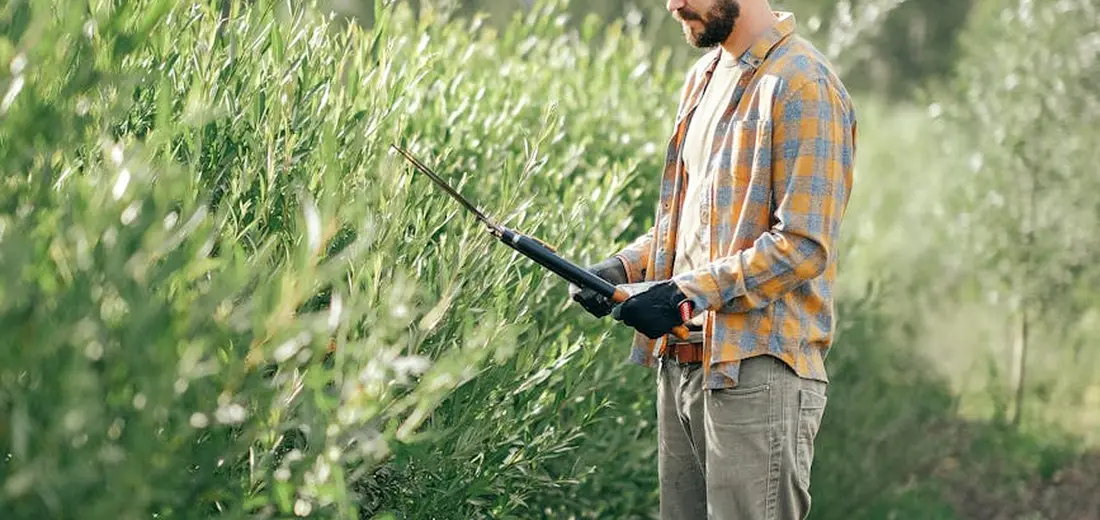
Pruning isn’t about hacking away at your plant; it’s a thoughtful process of guiding its energy. I’ve learned that a few precise cuts are always better than a dozen haphazard snips, and your plant will thank you with lush, vigorous growth. So what’s the difference between pruning, trimming, and grooming? Pruning shapes growth and health, trimming keeps edges neat, and grooming maintains overall appearance.
Mastering Thinning Cuts
A thinning cut removes an entire stem or branch back to its point of origin, like where it meets a larger stem or the main trunk. I use this technique constantly on my bushy plants like Ficus and Schefflera. Thinning cuts open up the plant’s interior, allowing light and air to flow freely through the center, which is crucial for preventing mold and encouraging leaves to develop on inner branches.
- Identify a stem that is crossing another or growing inward toward the center of the plant.
- Trace that stem back to where it connects with a larger branch or the main stem.
- Using clean, sharp pruners, make a clean cut right at that junction.
Strategic Shoot and Branch Removal
This is about being selective. You’re the director, and you get to decide which “actors” get the spotlight. Look for weak, spindly growth (often called “water sprouts”) or branches that are ruining the plant’s shape. By removing these weaker shoots, you channel the plant’s resources into strengthening the main, healthy branches, resulting in a sturdier and more beautiful specimen. On my Monstera, I regularly remove smaller, less-perforated leaves to give the giant, fenestrated ones all the energy.
- Stand back and observe your plant’s overall form.
- Pinpoint branches that are overly long, leggy, or growing in an awkward direction.
- Cut these branches back to a point just above a leaf node or a side shoot to encourage bushier growth.
Essential Deadwood Removal
This is the non-negotiable part of pruning. Any dead, brown, or crispy leaves and stems are not just ugly; they are an open invitation for pests and disease. Removing this deadwood is like taking out the trash-it instantly makes your plant healthier and reduces the risk of problems spreading to healthy tissue. My rule of thumb is simple: if it’s crunchy and brown, it’s got to go.
- Gently tug on brown leaves; they often snap off cleanly at the base.
- For dead stems, use sterilized scissors or pruners to cut them back to the nearest healthy, green growth.
- Dispose of this material in your compost or trash-don’t leave it sitting on the soil surface.
Choosing the Best Time for Pruning
Timing your pruning is just as important as the technique you use. Getting the timing right means your plant will recover faster and burst with new growth, while a poorly timed trim can leave it stressed and struggling. For pothos, properly pruning and trimming promotes optimal growth by removing leggy growth and encouraging new shoots. Trim just above a node to spur branching and a fuller, healthier plant.
Seasonal Timing for Houseplants
The absolute best time to prune most of your leafy houseplant friends is in the spring and early summer. This is their natural period of active growth. Pruning as the days get longer signals to the plant to wake up and put its energy into producing fresh, new stems and leaves right where you made your cuts. For flowering houseplants, pruning at this time can encourage more blooms by promoting bud development. It helps direct energy toward flowering shoots. I avoid major pruning in the deep winter when growth is slow; the plant just doesn’t have the energy to heal properly.
Reading Your Plant’s Growth Cycle
Your plant will tell you when it’s ready for a haircut. Don’t just look at the calendar; look at the plant itself. The key signal is seeing new, tiny leaves emerging from the stem tips-that’s your green light that the plant is in active growth mode and ready to handle pruning. For flowering plants, the rule is to prune right after they finish blooming, so you don’t accidentally cut off next year’s flower buds. My Christmas Cactus gets its shaping trim every year right after its final flower drops.
- Look for signs of new growth like bright green tips on branches.
- For succulents, prune when you notice plump, new rosettes forming.
- If a stem breaks unexpectedly, you can perform a corrective prune any time of year to fix the damage.
Selecting and Caring for Your Pruning Tools

My Go-To Toolkit
Over the years, I’ve found that a simple, high-quality toolkit prevents messy cuts that can stress your plants. You don’t need a huge arsenal; just a few reliable tools will cover almost every pruning job. My must-haves are a pair of sharp bypass pruners for most stems, a set of precision snips for delicate succulents and tight spaces, and a bottle of 70% isopropyl alcohol for cleaning. For more details, check out essential pruning tools.
I made the mistake of using old, dull scissors when I first started, and it crushed the stems instead of slicing them cleanly. Bypass pruners work like scissors for a clean cut that heals quickly, which is vital for plant health. For my smaller succulents and herb plants, I absolutely rely on my fine-tip snips to get into those crowded spaces without damaging neighboring leaves. Pruning is how you control a plant’s size and shape as it grows. With proper cuts, you keep specimens compact and well-formed.
The Critical Step of Tool Sanitation
This is the step I see most beginners skip, but it’s non-negotiable. Think of sanitizing your tools like washing your hands before preparing a meal-it prevents spreading invisible germs. I keep a small spray bottle of rubbing alcohol right in my gardening caddy so it’s always within reach.
My sanitation routine is simple and fast. I wipe down the blades with alcohol before I start, between each plant, and again when I’m finished for the day. This one habit has saved my collection from nasty fungal and bacterial infections that can travel from a sick plant to a healthy one on a dirty blade.
Tailoring Your Approach: Succulents vs. Foliage Plants

Pruning for Succulent Ventilation
Pruning succulents is less about shaping and more about preventing rot. Good air flow around the base of your succulents is your best defense against mold and mildew. I focus on removing leaves that are touching the soil or are densely packed together at the plant’s center.
I gently twist off any lower leaves that are yellowing, dying, or simply crammed against the pot’s edge. Removing these lower leaves opens up air channels and reduces the damp, stagnant environment where rot loves to start. Leggy growth happens when succulents stretch for light because they’re not getting enough bright, even illumination. The fix is brighter light (and, if needed, a bit of pruning to encourage denser new growth). For stretched-out, “leggy” succulents, I use my snips to behead the top rosette, which encourages a more compact, healthier plant to regrow.
Opening Up a Dense Foliage Plant
With a bushy pothos or a dense fiddle leaf fig, the goal is to let light and air reach the inner branches. I always start by looking for the “Three Ds”-any branches that are dead, damaged, or diseased. Removing these first immediately improves the plant’s appearance and health.
Next, I identify branches that are crossing over each other or growing straight back into the center of the plant. Thinning out these interior branches allows light to filter through the canopy, energizing the lower leaves. I make my cuts just above a leaf node or a side branch, which signals the plant to push out new growth in that direction, creating a fuller but more open structure.
Avoiding Common Pruning Mistakes

I’ve made my fair share of pruning blunders over the years, and watching a plant struggle after a bad trim is a tough lesson. Learning what not to do is just as important as knowing the proper technique. Let’s walk through the most frequent errors so you can sidestep them completely. These are the common pruning mistakes to avoid, so you can prune with confidence. By staying mindful of them, your plants will thank you with healthier growth.
Over-Pruning and Shocking the Plant
It’s easy to get carried away, especially when you first start. I call this “scissor-happy” syndrome. Never remove more than one-third of the plant’s foliage in a single session. Taking off too much at once shocks the plant, as it loses its primary way to create energy through photosynthesis. The plant will divert all its energy to simply surviving instead of producing new, healthy growth.
Using Dull or Dirty Tools
I learned this the hard way with a favorite jade plant. Using old, rusty scissors crushed its stems instead of making a clean cut. Always use sharp, sterilized pruning shears or a clean, sharp knife. Dull blades tear plant tissue, creating a larger wound that’s more susceptible to disease and slower to heal. I wipe my blades with isopropyl alcohol before and after each use to prevent spreading any potential pests or fungi between plants.
Quick Tip
For succulents with fleshy stems, a clean razor blade often gives the cleanest cut and promotes the fastest callousing.
Making the Wrong Type of Cut
Where you make the cut is critical. A common mistake is leaving a long stub above a leaf node or bud. Make your cuts just above a leaf node or a set of leaves, angling the cut away from the new bud. This encourages the plant to branch out right at that point, creating a fuller shape. Stubs left behind don’t heal well and can rot, potentially introducing disease back into the main stem.
Pruning at the Wrong Time
Timing is everything. The worst time to prune most houseplants is as they are entering their dormant period, usually in late fall and winter. The ideal time for a major prune is at the start of the active growing season, typically in spring or early summer. This gives the plant the entire growing season to recover and push out vigorous new growth. Pruning a dormant plant can stunt its growth or even kill it, as it lacks the energy to heal. Different types of houseplants have different pruning windows depending on their growth cycles. Knowing your plant type—tropicals, woody evergreens, or succulents—helps you time pruning for the best results.
- Over-pruning removes too much foliage, shocking the plant.
- Dirty tools can introduce bacteria and disease.
- Stub cuts are prone to rot and don’t encourage new growth.
- Bad timing stresses the plant during its natural rest period.
FAQs
Which plants benefit most from pruning for better airflow?
Dense houseplants like Ficus and bushy succulents benefit most from pruning to enhance airflow.
How often should I prune to maintain good airflow?
Prune every few months during the active growing season when signs of poor circulation appear.
In a greenhouse, how can pruning airflow be optimized?
In greenhouses, prune to increase plant spacing and ensure proper ventilation for optimal airflow.
How does pruning affect air circulation in a dense plant bed?
Pruning creates gaps in the canopy, allowing air to move freely and reduce stagnation.
What pruning techniques promote better airflow (e.g., thinning, cutting back)?
Thinning cuts and selective branch removal are effective techniques to improve airflow by reducing density.
How do I prune for airflow without stressing the plant?
To avoid stress, prune during active growth periods and limit removal to less than one-third of the plant’s foliage.
Keep Your Plants Thriving with Smart Pruning
Proper pruning opens up your plants to better light and air, which I’ve seen transform leggy succulents and crowded houseplants into vibrant, healthy specimens. This is also key to keeping succulents small, compact, and healthy in tight spaces. Regular pruning helps control size without sacrificing vigor.
- Use clean, sharp tools to make precise cuts and avoid spreading disease.
- Target overcrowded or dead growth first to boost circulation and light reach.
- Time your pruning for active growth seasons so plants recover quickly.
You’ve got the knowledge to prune with purpose-so grab those shears and give your green friends the care they need to shine. I’m cheering you on as you help your plants breathe and grow beautifully!
Further Reading & Sources
- Why Should You Prune | Pruning Basics and Easy Tips | joe gardener®
- Pruning Cannabis: Don’t Make This Mistake
- Pruning Cannabis to Maximize Airflow & Light Penetration | Pipp Horticulture
- The Art of Pruning and Training Plants in Indoor Grow Systems
Lena Greenfield is a passionate horticulturist and plant care expert with over 10 years of experience cultivating and nurturing hardy house plants. With a deep understanding of both indoor and outdoor gardening, Lena shares practical advice on choosing, caring for, and maintaining resilient plants that flourish year-round. Through her knowledge and hands-on approach, Lena helps plant lovers transform their spaces into vibrant, green sanctuaries, no matter their gardening experience.
Pruning Techniques